
QUOTES:
- Leslie Kaminoff: “There is no wrong answer to an inquiry.”
- T.K.V. Desikachar: “Sthira is alertness without tension; Sukha is relaxation without dullness.”
- Leslie Kaminoff: “Flexibility without strength is instability. Strength without flexibility is rigidity.”
- Leslie Kaminoff: “There are correct ways to do techniques. As educators we must balance technique with inquiry. Too much sukha/inquiry can lead to confusion and anxiety. Too much sthira/technique can lead to rigidity and feeling you don’t fit in.”
- Leslie Kaminoff: “It’s not that we differ from the norm. Difference is the norm.”
- Leslie Kaminoff: “Asanas don’t have alignment, people have alignment. Asana is something people do, it does not exist outside of an individual’s body.”
- From Leslie’s work with Amy Matthews, which references her work with Bonnie Bainbridge Cohen: “Alignment is a clear pathway of weight passing through balanced joint spaces.”
- BoS : CoG : RoM – Leslie’s movement philosophy: start with BoS before moving on to changing your center of gravity (core in motion) before RoM (full expression of the pose). If at any point you experience difficulty, go back to the prior step:
- BoS: Base of Support
- CoG: Center of Gravity
- RoM: Range of Motion
- Amy Matthews, paraphrasing Bonnie Bainbridge Cohen: “Healthy movement is well-distributed: a little bit of movement from a lot of places.” This was further clarified by Leslie: “a little bit of movement, coming from a lot of places, repeated a reasonable number of times.”
- Conversely, Leslie Kaminoff says “Unhealthy movement is too much movement coming from too few places repeated too many times (repetitive stress).”
- Leslie Kaminoff: “Breath (and thus yoga) is the great teacher of tapas, svadhyaya, isvarapranidhana. Tapas refers to that which you can change; isvarapranidhana relates to the stuff you can’t change; svadhyaya refers to self-reflection, the introspection that allows us to distinguish one from the other.”
- T.K.V. Desikachar: “Sometimes you need to give people 90% of what they want so you can slip in 10% of what they need.”
- Leslie Kaminoff: “If you can make even a tiny bit of positive change in something you do a lot of (like walking or breathing), it leads to a lot of positive change.”
- Leslie Kaminoff: “The energy that gets air into your lungs isn’t in your body, it’s outside, it’s atmospheric pressure. You make the space and the universe fills it with air.”
- T.K.V. Desikachar: “You cannot have yoga without viyoga.”
- T.K.V. Desikachar: “The success of Yoga does not lie in the ability to perform postures but in how it positively changes the way we live our life and our relationships.”
- Leslie Kaminoff: “If once you arrive in an asana it needs correcting, reconsider how you got there.”
WATCH/LISTEN:
- Prana chant video
- The Warrior Series: Upwardly Mobile video and article on Yoga Journal website
- Tom Myers’ Deep Front Line dissection video
- Gil Hedley’s courses and video clips
- Freeing the Breath: Health, Relaxation, and Clarity Through Better Breathing with Leslie Kaminoff
- YouTube channels: free shorts from YogaAnatomy.net online courses and Leslie’s Breathing Project Q&A series. Got a yoga or anatomy question you’d like Leslie to address? Send it to questions@yogaanatomy.org.
- Jessica Wolf’s Art of Breathing
- Yoga Alliance’s Yoga Talks with Leslie Kaminoff on Regulation
- Jill Miller – “Hip Replacement Surgery” on J. Brown’s podcast
- The Man Who Lost His Body, documentary about proprioception
RECOMMENDED READING:
- ANATOMY:
- Yoga Anatomy, 3rd edition
- Yoga Journal article: Anatomy 101: Understanding Your Tailbone by Amy Matthews and Leslie Kaminoff PLUS: the missing illustration
- More Leslie Kaminoff content on Yoga Journal
- Anatomy Trains: Myofascial Meridians for Manual and Movement Therapists by Thomas W. Myers
- Your Body, Your Yoga and Your Spine, Your Yoga: Developing stability and mobility for your spine by Bernie Clark
- HISTORY / BIOGRAPHY / PHILOSOPHY:
- Sri T. Krishnamacharya’s history of classical alignment in the Yoga Makaranda, part I (PDF) and Yoga Makaranda, part II (PDF)
- 100 Years of Beatitude – T. Krishnamacharya’s Centennary (low-resolution VHS transfer)
- Religiousness in Yoga: Lectures on Theory and Practice by T.K.V.Desikachar
- Claude Marechal’s article describing some of the teaching of Professor Krishnamacharya: Teachings
- Health, Healing, and Beyond: Yoga and the Living Tradition of T. Krishnamacharya by T.K.V. Desikachar and R.H. Cravens
- Yoga Yajnavalkya (PDF) or book, by A. G. Mohan
- Catching Fire: How Cooking Made Us Human by Richard Wrangham
- The “Yoga Sutra of Patanjali”: A Biography (Lives of Great Religious Books) by David Gordon White
- “Seizing the Whip: B. K. S. Iyengar and the Making of Modern Yoga (PDF)” by Eric John Shaw, California Institute of Integral Studies, Asian and Comparative Studies
- “Sacred Thread: A Comprehensive Yoga Timeline: 2000 Events that Shaped Yoga History” by Eric Shaw
- “The Goddess Pose: The Audacious Life of Indra Devi, the Woman Who Helped Bring Yoga to the West” by Michelle Goldberg
- Leslie’s original post on providing certificates.
- Yoga Alliance “Statement on Yoga Therapy”
- Leslie’s blog post from 2008: “I’m Not a Yoga Therapist Anymore“
- SCIENCE / PAIN / MEDICINE:
- YOGA PRACTICE:
- The Heart of Yoga: Developing a Personal Practice by T.K.V. Desikachar
- Yoga for Wellness: Healing with the Timeless Teachings of Viniyoga by Gary Kraftsow
- Intelligent Yoga: Re-educating Mind and Body by Peter Blackaby
- Wild Thing Is Not Impossible (but it still might not be worth doing) by Amy Matthews
- Teaching Inclusive, Safe And Ethical Yoga – Part 1: Empowerment by Yonnie Fung
- Yoga for Bendy People: Optimizing the Benefits of Yoga for Hypermobility by Libby Hinsley
- Emotional Yoga by Bija Bennett
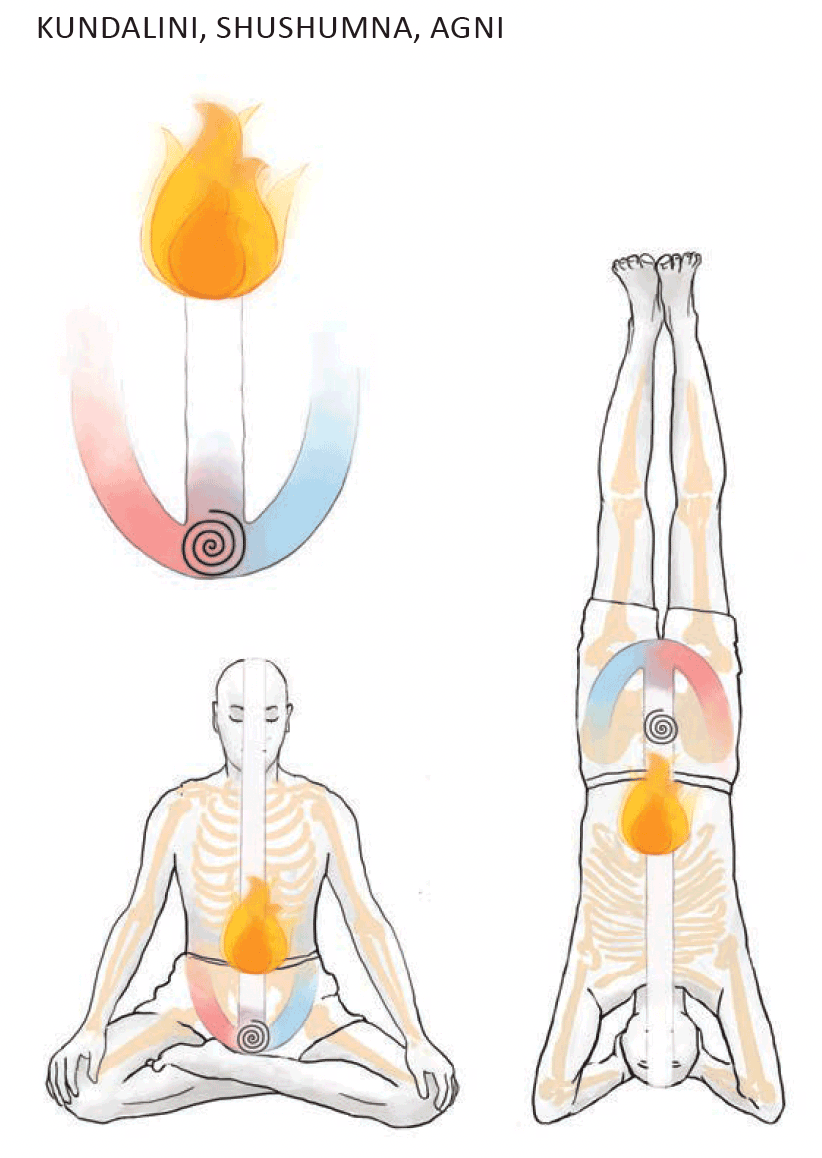
- Kundalini, shushumna, agni images
- Students of T.K.V. Desikachar:


Should We Keep Mula Bandha All The Time?
Have you heard advice about maintaining mula bandha all the time? Have you heard advice about maintaining any body position all the time? Join Leslie and students as they examine well-meaning advice, habits, and practices you can follow to honor the balance into your system.
WHAT IS FLEXIBILITY, AND HOW MUCH DO WE REALLY NEED?
HONESTY IN YOGA CREDENTIALING
Leslie began discussions with American Yoga Council (AYC) founder and CEO Andrew Tanner years ago about how to create an organization that would actually benefit its members.
He believes wholeheartedly in the principles and practices of the organization and serves on the Advisory Council.